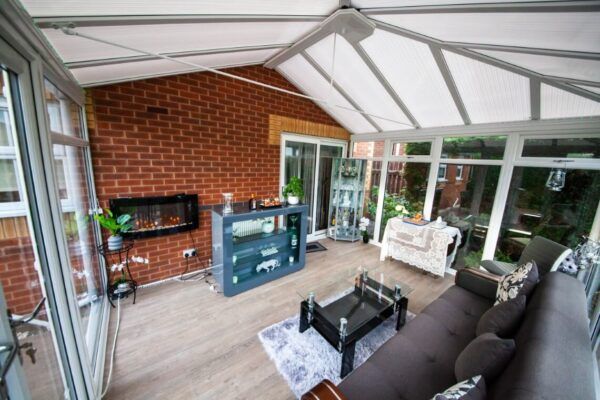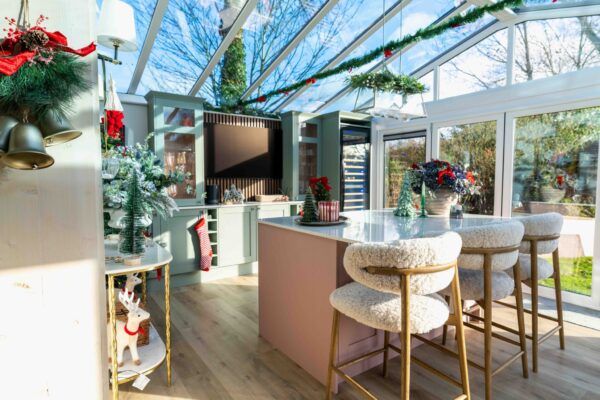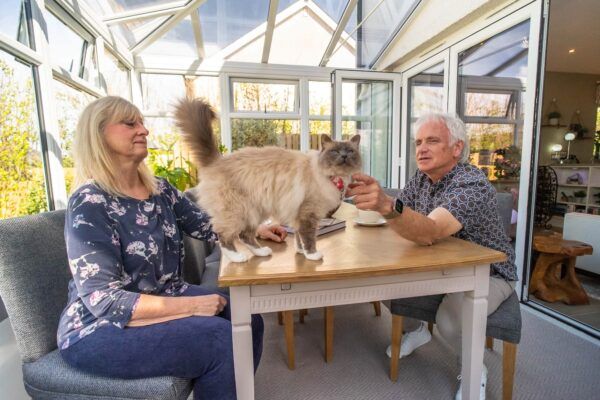

Your conservatory will be one of the most enjoyable rooms in your home – a bright, open space you can use whatever the weather.
But, with energy costs a real consideration for most households, finding the right way to heat it matters.
If your central heating plumbing already reaches your conservatory, extending it is usually the cheapest option to run – most boiler fuels cost less per unit than electricity.
If it doesn’t, or if you only use the space occasionally, a plug-in option like an infrared panel can work out cheaper overall, with minimal installation cost and the flexibility to heat only when you need it.
In this guide, we’ve compared the most popular conservatory heating options with real running costs, so you can find what works for your space and your budget.
Why could my conservatory be cold in winter?
Before choosing a heating method, it’s worth understanding why conservatories sometimes lose heat – because the single most effective thing you can do is address insulation first.
A well-insulated conservatory needs less heating, costs less to run and stays comfortable for longer.
Insulation
This is the first thing to look at. Good insulation helps your conservatory hold on to warmth, and there are several ways to improve it – from conservatory blinds and draught-proofing to upgrading your roof materials.
See our guide to conservatory insulation for a full breakdown of what’s available.
Roof type
This makes a significant difference. Solid and tiled roofs offer strong thermal performance, with built-in insulation that keeps heat in and cold out.
Glass roofs with energy-efficient glazing – such as ConservatoryLand’s Blue Self-Cleaning, Solar Control glass – also perform well.
Older polycarbonate roofs tend to let more heat escape, though modern polycarbonate has improved considerably. You can explore the options on our conservatory roofs page.
Glazing and seals
Older conservatories may have single glazing or worn seals that allow draughts, making the space harder to heat.
If your conservatory has become noticeably colder over time, it’s worth checking whether the seals, glazing or roof need attention.
If you’re not sure where to start, our conservatory too cold guide covers the most common causes and what you can do about each one.
What are the best conservatory heating options?
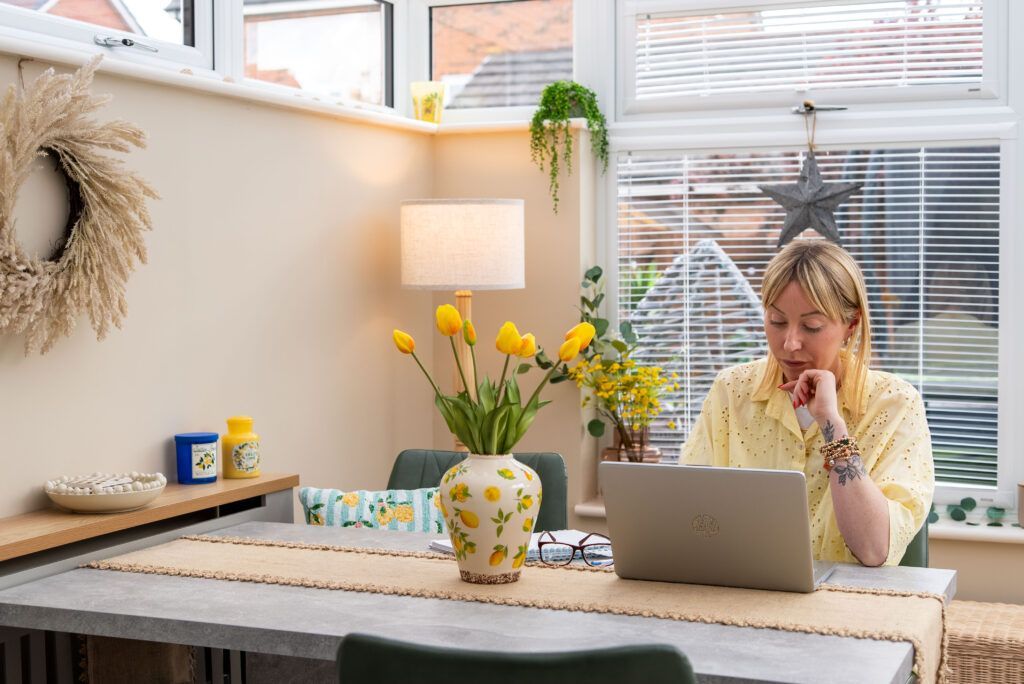
Once your insulation is in good shape, the right heating method depends on your budget, how often you use the space and whether you have existing plumbing you can extend.
Here are the most popular options, with indicative running costs based on typical UK energy rates. Exact costs will vary with your tariff – but the relative differences between options tend to stay consistent.
Central heating radiators
If your home’s central heating plumbing can be extended into your conservatory, this is usually the cheapest option to run – most boiler fuels cost less per unit than electricity, so the hourly running cost tends to be lower than any electric alternative.
That said, running cost isn’t the whole picture. If the plumbing doesn’t already reach your conservatory, extending it can add significant upfront cost.
So, if you only use the space a few times a week, a plug-in electric option with near-zero installation cost may work out cheaper overall.
Central heating radiators make the most financial sense when the plumbing is already close by and you use the conservatory regularly.
The main practical consideration is wall space. Conservatories tend to have more glass than wall, so there may not be room for a large radiator. Column radiators or slimline models can help here.
Installation typically costs £300-£800 per radiator, depending on how far the plumbing needs to extend. If you extend plumbing into your conservatory, you’ll need to follow the applicable building regulations – conservatories are exempt from building regulations only if there is an independent heating system with separate temperature and on/off controls in place.
See our guide on planning permission for a conservatory with a radiator for more detail.
Electric radiators
Electric radiators are a practical option when extending your plumbing isn’t possible – all you need is a plug socket. A 1kW model typically costs around two to three times more per hour to run than a boiler-fed radiator of equivalent output.
Most modern electric radiators have adjustable heat settings – and oil-filled models retain warmth for a while after they’re switched off, which helps with efficiency.
The trade-off is that running costs can add up with prolonged daily use, so they’re best suited to spaces you heat for a few hours at a time rather than all day.
A portable electric radiator costs from around £30-£130 to buy, with no installation needed beyond plugging it in. Wall-mounted electric radiators are also available from around £100-£300 and give a neater finish.
Infrared heating panels
Infrared panels work differently from conventional heaters – rather than warming the air, they heat objects and surfaces directly, which means less energy is wasted on heating air that escapes through windows and doors.
Because they use less wattage to achieve a similar level of comfort, they typically cost noticeably less per hour to run than a conventional electric radiator – making them a good middle ground between running cost and ease of installation.
They mount on a wall or ceiling, take up no floor space and don’t need plumbing.
A 600W panel costs from around £100-£350 to buy and install, depending on the brand and whether you fit it yourself or have it professionally mounted.
One thing to be aware of is that panels can become very hot to the touch, which is worth considering if you have young children or pets.
Underfloor heating
Electric underfloor heating offers steady, even warmth across the whole floor – and, because it’s hidden beneath the surface, it doesn’t take up any wall or floor space.
Running costs sit in a similar range to other electric options, though the even heat distribution means you may need it on for fewer hours to feel comfortable. See our full guide to underfloor heating for more detail.
Installation costs are higher than other options – typically £600-£1,500 for a 14m² electric system, depending on the floor type and complexity. It works well with tile, laminate and engineered wood – and the temperature is easily controlled with a thermostat.
Is underfloor heating worth it in a conservatory? If you value consistent, unobtrusive warmth and you’re planning a new floor anyway, it’s well worth considering. The higher upfront cost is offset by comfortable, draught-free heat that you barely notice is there.
Log burners
A log burner is a powerful heat source that also adds real character to a conservatory. Fuel costs vary depending on what you burn and where you source it, so there’s no single running cost to compare – but the heat output is substantial.
For regulations, flue requirements and planning guidance, see our guide to having a log burner in a conservatory.
Installation typically costs £1,500-£4,500 including the stove, flue and fitting by a HETAS-registered installer. The main cost variable is the flue – if your conservatory doesn’t have an existing chimney, a twin-wall flue system will add to the total.
It’s a bigger investment upfront but, for homeowners who want a focal point as well as a heat source, it’s hard to beat.
Fan heaters
A 2kW fan heater has the highest running cost in this comparison by some distance – roughly double the hourly cost of a 1kW electric radiator, because it draws twice the wattage. That makes fan heaters an expensive choice for regular use.
They’re cheap to buy (£15-£40) and provide instant warmth, so they have a role as a quick top-up on an unexpectedly cold evening. But, for day-to-day conservatory heating, the running costs make them hard to recommend.
How much does it cost to heat a conservatory?
The table below compares all six options side by side. We’ve focused on the relative cost ranking rather than exact figures, since energy tariffs change regularly – but the order from cheapest to most expensive to run has remained consistent over time.
| Heating type | Installation cost | Running cost | Summary |
| Central heating radiator | £300-£800 | Lowest (most boiler fuels cost less per unit than electricity) | Cheapest to run if plumbing is already close by; higher upfront cost if it isn’t |
| Electric radiator (1kW) | £30-£300 | Medium – high (based on electricity rate per kWh) | Plug-and-play; running costs add up with prolonged daily use |
| Infrared panel (600W) | £100-£350 | Medium (lower wattage than electric radiator for similar comfort) | Heats surfaces directly; no plumbing needed; panels can get very hot |
| Underfloor heating (electric, 14m²) | £600-£1,500 | Medium (similar to electric radiator; even heat may reduce hours needed) | Steady, discreet heat; higher installation cost; best planned into a new build or refurb |
| Log burner | £1,500-£4,500 | Varies (depends on fuel type and source) | Powerful heat, real character; flue and HETAS installation required |
| Fan heater (2kW) | £15-£40 | Highest (draws twice the wattage of a 1kW electric radiator) | Cheapest to buy; most expensive to run; best as an occasional top-up only |
In practice, the choice often starts with plumbing: if it’s already in place, extending your central heating is the cheapest option to run.
If it isn’t, infrared panels offer a lower running cost than both the electric radiator and fan heater in this comparison, because they use less wattage to achieve a similar level of comfort.
What is the most energy-efficient way to heat a conservatory?
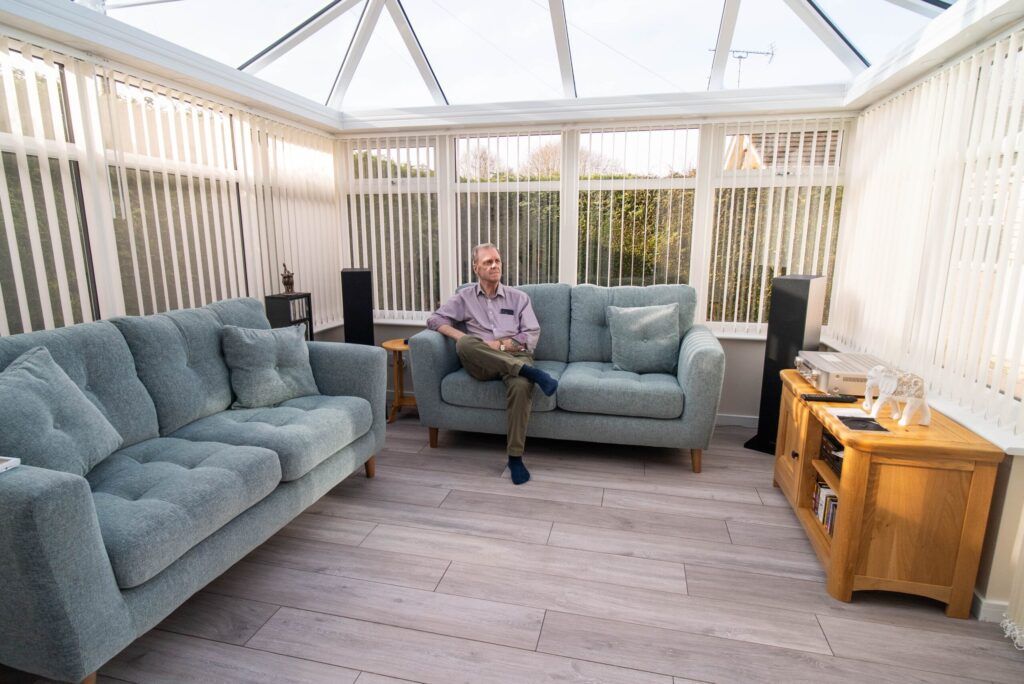
Central heating radiators and infrared panels are the two options to look at first if energy efficiency is a priority.
Which one suits you comes down to plumbing: central heating if it’s in place, an infrared panel if it isn’t.
It’s worth noting that running cost and energy efficiency aren’t quite the same thing. An hourly cost tells you what a heater costs to run – but not how effectively it converts that energy into useful warmth in your space.
Infrared panels, for example, heat objects and surfaces rather than air, which means less energy is lost through ventilation – a particular advantage in a conservatory with a lot of glazing.
Whichever heating method you choose, insulation and roof type have a significant effect on how efficiently your conservatory holds heat. The better insulated it is, the less work any heater has to do – which is why addressing insulation first always makes sense. You can explore your options on our conservatory roofs page.
Does a solid roof conservatory stay warmer?
Yes – a solid or tiled roof usually provides better insulation than a glazed roof, which means your conservatory retains more heat and your heating costs come down over time.
If your conservatory has an older roof and you’re finding the heating bills hard to justify, upgrading to a well-insulated solid roof could make a noticeable difference – not just because the roof keeps heat in but because you need the heating on for fewer hours.
ConservatoryLand offers solid and tiled replacement roofs for existing conservatories and, if you’re planning a new build, your roof choice is one of the most important decisions for long-term comfort and efficiency.
You can explore the options on our conservatory roofs page, or use our Quote Builder to design a conservatory built for year-round comfort.
Keeping your conservatory warm all year round
Whatever your budget, there’s a heating solution that can keep your conservatory comfortable throughout the year.
The key is to start with good insulation – it’s the single change that makes the biggest difference to every heating option – and then choose a method that suits how you use the space.
For more on managing your conservatory’s temperature through every season, see our guide on how to manage your conservatory’s temperature.
Ready to plan ahead? Browse real customer projects and interior inspiration on our Inspiration page to see how other homeowners are using their conservatories all year round.
You can also use our Quote Builder to design a conservatory built for year-round comfort, or call us free on 0800 952 8000.